
What Is Frozen Shoulder?
Jun 03, 2026
Frozen shoulder is a very common occurrence in women between the ages of 40-60 years. The medical term for frozen shoulder is adhesive capsulitis (AC). The symptoms include stiffness, pain, and limited range of motion in your shoulder. In the early stages, pain typically doesn’t prevent you from reaching up. However, reaching backwards, as if you were getting ready to throw a ball, tends to be painful. This is why frozen shoulder is sometimes referred to as “pitcher’s arm.”
Most doctors believe frozen shoulder is caused by an injury, overuse, or from an underlying condition such as diabetes or rheumatoid arthritis. But, any shoulder problem can lead to a frozen shoulder if you do not work to keep full range of motion. Even sitting at a desk can be a contributing cause of frozen shoulder. When tension and stress get stored in our shoulders, circulation is limited. This can start a cascade of chronic shoulder pain and loss of flexibility. And, the more you limit the use of your shoulder, the more the tissues around your shoulder stiffen and scar tissue forms. After a while, every day movements, and even sleeping, can become difficult.
Frozen shoulder is usually diagnosed by physical exam showing limited range of motion and pain. Your doctor may also order X-rays and an MRI. Frozen shoulder usually comes on slowly, then goes away slowly – usually within a year, but sometimes it can take up to 30 months or longer to heal. That is a long time to be in pain! And, if you have had frozen shoulder on one side, you may be 50 percent more likely to experience it on the other side.
My own frozen shoulders have been an on and off situation for nearly 5 years, but last summer the left started up with a vengeance. I have kept my mobility through Pilates, yoga, massage, and ARP Wave treatment. My shoulder is massively improved since last October when I couldn’t even put on a jacket because I could not move my left arm back at all.
Traditional Approach to Treating Frozen Shoulder Syndrome
A frozen shoulder typically moves through 4 stages — inflammation, freezing or stiffening, frozen, and then thawing. Treatment for a frozen shoulder is often aggressive, which is not always good. But, if left untreated, a frozen shoulder can last years before resolving.
The traditional approach to treating a frozen shoulder is to use a combination of therapies, including anti-inflammatory medications, pain patches, steroid injections, physical therapy and surgery. In the early stages, your doctor may prescribe prescription anti-inflammatory medications to lower inflammation and relieve pain. If anti-inflammatory medications don’t relieve the pain and inflammation temporarily — remember they are never a cure — the next step is typically cortisone injections. Again, steroids are not a cure and may cause problems down the road due to weakening the joint capsule and attachments.
During the inflammation and freezing periods, you may also be prescribed 8-12 weeks of physical therapy. This can be very painful, and with anti-inflammatory medications and steroids on board, you need to be careful not to over work your shoulder. While many physical therapists are trained specifically for helping people with shoulder problems, some are more generally trained. You should ask what experience your therapist has with frozen shoulder. Alternatively, you could try True Flexibility Training.
If your shoulder is completely frozen when you seek treatment, surgery will often be recommended. The surgeries that are often used include manipulation where, under general anesthesia, your arm is moved into different positions to stretch tight tissue, and arthroscopic surgery to cut tight tissues, remove scar tissue and more. Sometimes these surgeries are done together.
While this is the standard protocol, there are risks involved with all of these treatments. And, looking at frozen shoulder as simply a painful physical aliment while staying the course with traditional medications, therapy and surgery may not provide you with the relief you need. Most health issues arise as a reminder that something else is not working in your life.
Heal Your Emotions to Heal Your Shoulder Pain
In many respects, the intense pain of a frozen shoulder can be the biological equivalent of a life coach steering you away from what doesn’t support you. And, shoulders have everything to do with personal responsibility and your ability to carry out your experiences in life with joy. If you feel you are constantly “shouldering the burden” then you will likely experience a frozen shoulder at some point, especially if you feel stuck in your current circumstances.
Some common emotional patterns associated with a frozen shoulder include feeling that you need to carry the “weight of the world on your shoulders.” Another common pattern is being too rigid in your thinking, or too set in your ways. A third common pattern is engaging in too much negative self-talk, which often means there is sadness associated with your physical pain.
Because our bodies are made of energy, pinpointing the origin of your pain, and exploring your mental, emotional and energetic patterns may provide important steps toward healing from a frozen shoulder. The exact location of your shoulder pain can be a clue to what is not working in your life. For example, pain in your shoulder blade area may mean you are focusing on something that is not serving your highest purpose. Pain toward the bottom edge of your scapula may mean you take on (but don’t release) other people’s problems, or give too much of yourself in a relationship. Likewise, the side of your body where your shoulder pain resides is a clue. Pain in your left shoulder may have to do with your past. And, it usually has something to do with a woman, or the feminine. If your right shoulder is bothering you, it is usually about the future, a man, or the masculine aspects of your life.
12 Ways to Heal a Frozen Shoulder
It’s not uncommon that two people with the diagnosis of frozen shoulder have completely different manifestations of physical pain and very different emotional patterns as the root cause.
Here are some other steps you can take to begin to heal from a frozen shoulder.
Make lifestyle changes. A diet full of fresh fruits and vegetables and omega 3 fatty acids and free of sugar and processed foods is the best way to eliminate chronic inflammation in your body. Supplements, such as turmeric and ginger, that target inflammation can be helpful. A good magnesium supplement may help with sore and tense muscles. And, antioxidants can help eat up free radicals.
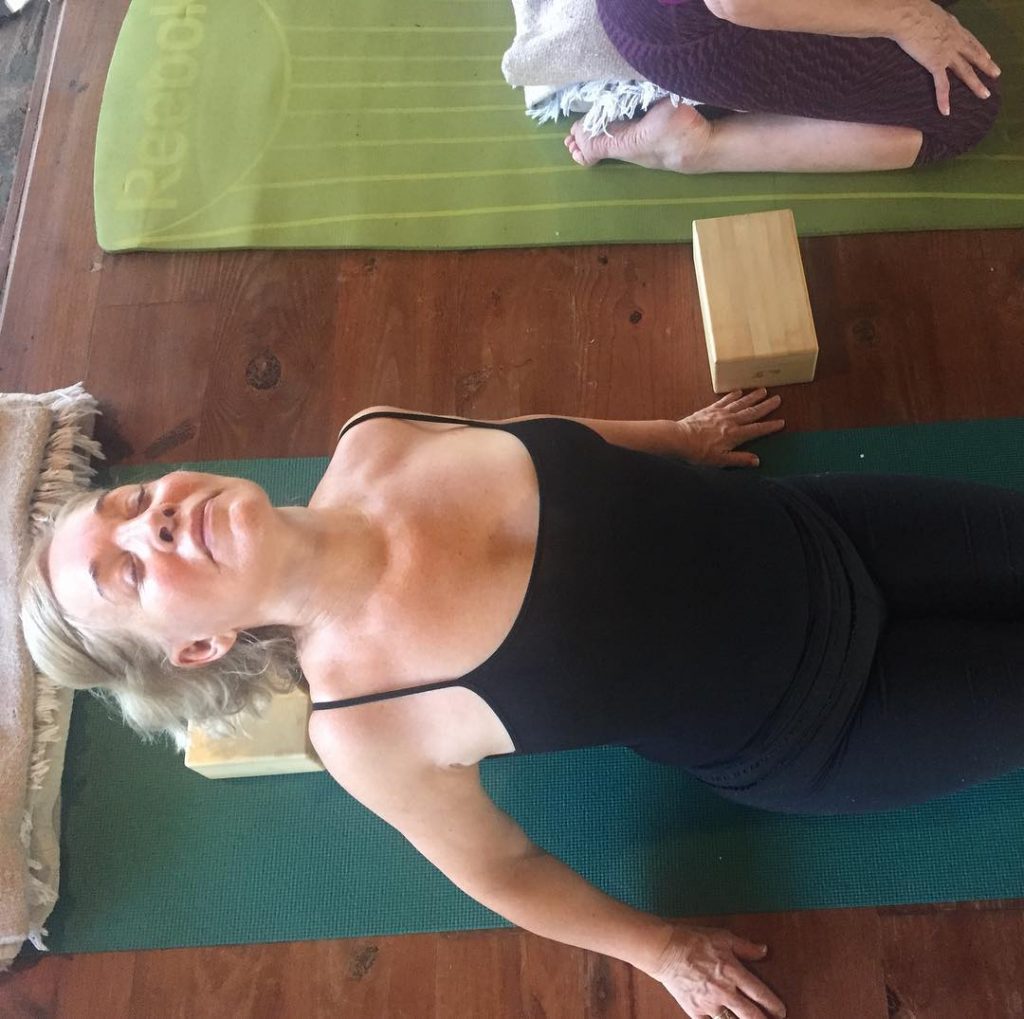
Stretch your body gently. Practicing healing yoga asanas such as shoulder shrugs, child’s pose with arms forward, eagle pose, and thunderbolt pose, as well as heart opening yoga poses such as camel, are good for opening your shoulders. I just completed a yoga retreat where we practiced a lot of restorative poses to open my chest and rotate my arms properly in the sockets and keep my arm pits open. At first this was very painful. But, I found that holding the pose and breathing into it for at least 20-30 seconds begins to remodel the fascia. I also found that I hold a lot of grief in my shoulders, which is gradually coming up and out. I will now be putting assisted back bends into my daily routine. If yoga is not your thing, you can try gentle stretches, such as the doorway stretch, which can help improve muscle flexibility and relieve pain. Another effective stretch is to lie on your bed close to the edge and allow your arm/shoulder to hang down. You can do this this for 10 minutes every day.
Improve your posture. Try and avoid the slumping forward, especially while at a computer. When you are slumped forward your arms move into a medially-rotated position, which cause tension and pain in the subscapularis. If you sit at a desk a lot, remember to move your arms (and the rest of you body) frequently. Reaching your arms up and behind your head will help keep the subscapularis muscles stretched. While standing, try to pull your shoulder blades down and squeeze them toward the center of your back
Get a massage. Myofascial release massage targets the fascia. When the movement of the fascia is restricted it is impossible for you to move without experiencing pain. Myofascial release loosens up the frozen tissue which encourages a frozen shoulder to thaw.
Buy a TENS unit. TENS stands for Transcutaneous Electrical Nerve Stimulation. A TENS unit delivers electrical stimulation through electrodes placed on your skin to relieve pain temporarily. Your insurance company may cover the cost of a TENS unit if one is prescribed by your health care provider. Many physical therapists, chiropractors, and massage therapists also use these.
Try Tapping (EFT). Tapping is a great way to relieve both physical pain and its underlying cause. While you are Tapping, you can say, “even though I have this pain in my shoulder, I love and accept myself.” Or, “even though I can’t move my arm, I love and accept myself.” You can also create your own affirmation. As you practice Tapping regularly you will notice that it unlocks the feelings associated with your pain. As you unlock these emotions, you will also make great strides towards relieving your physical pain.
Shift your perspective. If every day life circumstances make you tense up, such as your children messing up your home right after you have cleaned it, or your boss canning a project that you have worked hard to complete, you may hold that tension in your shoulders. Instead of looking at these situations as annoyances, try shifting to gratitude. As you look at your messy house, try feeling gratitude for having your family in your life. View your work situation as a growth opportunity. Having a “glass half full” attitude can help loosen tension in your body and set you on the path toward healing.
Release anger. Responsibilities can often cause us to feel angry, especially when we feel that they are excessive, or that someone else is not carrying their own weight. Stored anger can cause pain in any area of your body. Practice releasing anger while forgiving yourself (and others.)
Try acupuncture. In Traditional Chinese Medicine, frozen shoulder is called “50 Year Shoulder” and is considered a wind-cold invasion. The more modern thinking is that persistent pain at a fixed site, such as with frozen shoulder, is also due to blood stasis. Acupuncture needles inserted into trigger points and also the meridians that transverse the painful area can help relieve the source of shoulder pain and immobility. In addition, Chinese herbal remedies for dispelling wind and cold and tonifying blood may help. Be sure to ask your acupuncturist what is right for you.
Recite affirmations. Louise Hay’s affirmation for shoulder problems is “I choose to allow all of my experiences to be joyous and loving.” You can also try “I am allowing love and joyous energy to flow through me freely.” Depending on which shoulder is frozen, you can add “I balance my feminine (left side) or masculine (right side) energy easily and effortlessly.” Finally, you can try saying, “with forgiveness, understanding and compassion, I bend and flow with ease.” Try doing your affirmations in front of a mirror several times per day.
Employ visualization. Imagine taking excess responsibilities off of your own shoulders and giving them back to the people they belong to. When you are giving back responsibilities, be sure to do this with love. After you are done with releasing excess responsibilities, notice how your shoulders feel.
Open your heart to receive love. Your shoulders are part of your 4th Chakra, known as the heart chakra. The lesson of the heart chakra is love and your heart chakra can become blocked when you are not open to receiving. Energy enters your heart chakra right between your shoulder blades. To open your heart chakra, start by acknowledging that you are worthy of love. (This is particularly important for empaths!) Envision love, and abundance moving into the space between your shoulder blades. You can do this during meditation, or simply take a few minutes several times per day to practice this. Another great way to receive loving energy is when someone offers you a compliment. Simply say “thank you,” and then visualize the energy of love and appreciation entering your heart.
Remember, your body has the wonderful ability to heal when you allow it to. A frozen shoulder is often a sign that you need to allow yourself to be flexible; to surrender and receive. As with any health symptom, frozen shoulder is not just physical. You need to work with it on all levels — body, mind, and spirit. The very worst thing you can do is nothing. And, if you keep moving in the same old way your body never gets new information to change and upgrade its patterns!
As I work with my shoulder in new ways, I feel as though my body is shedding the armor that was laid down when I was 4 years old, and a complete redo is happening. The same goes for my hips — remember the hip and shoulder girdles are related. What happens down there goes right up to the shoulders.
Have you ever had a frozen shoulder? How have you healed and what have you learned from your experience?
Author