
Do You Really Need to Eat Gluten Free?
Sep 02, 2026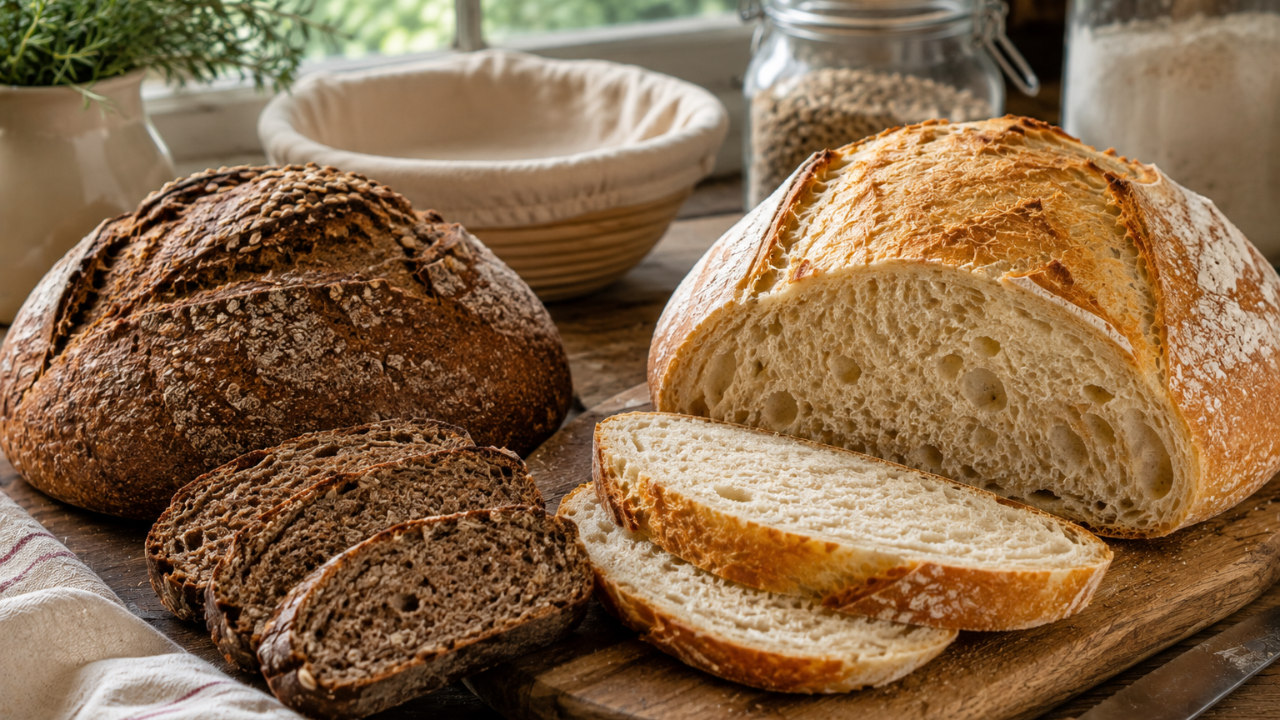
What is Gluten?
Almost everyone today is aware of gluten. In case you’re not, gluten is a name for the two proteins — gliadin and glutenin — found in certain grains such as wheat, rye, and barley. (It is the gliadin protein that people react to negatively.)
Gluten is literally the “glue” that holds food together. It is found in many foods such as bread and other baked goods, soups, pasta, cereal, sauces and salad dressings. Gluten can even be found in your toothpaste and medications! My general rule of thumb: If it’s packaged, it probably contains gluten!
If you are one of the many people who has jumped on the gluten-free food trend, you may think you are eating healthier. And you probably are. In many ways going gluten-free is healthier, especially if you have celiac disease or a gluten sensitivity, which is more common than you might think, and can cause a spectrum of symptoms that make you feel unwell.
So, if you are wondering whether you have a gluten sensitivity, or you’re not sure if a gluten-free lifestyle is good for you, or if you have struggled with going gluten free and haven’t fully been able to give it up, here is some information that may help you make your decision and stay on track.
I used to think that removing gluten from the diet was the answer to just about everything—from too much abdominal fat to bloating and indigestion.
But more updated research—plus my own experience—has led me to another conclusion.
Maybe gluten isn’t the whole problem. And maybe we’ve been blaming the wrong thing.
Think about it. For centuries, bread was called the staff of life. Bread has been a staple food in civilizations around the world for thousands of years.
So why, all of a sudden, do so many people have trouble eating bread?
What happened?
Well, as it turns out, a lot has happened.
Bread Isn’t What It Used to Be
The grains have changed. The way we grow them has changed. The way we mill them has changed. And we’ve certainly changed the way we turn them into bread.
Modern wheat has been bred and selected for characteristics that make it particularly useful for modern agriculture and commercial baking. And today’s industrial bread bears little resemblance to the slowly fermented breads human beings ate for centuries.
Interestingly, research comparing ancient wheats such as Einkorn and Spelt with modern bread wheat shows that the story isn’t as simple as ancient wheat having “less gluten.” In fact, some ancient wheats contain more total gluten—but the types and structures of their gluten proteins can differ. That’s one more reason I don’t think we can reduce this entire discussion to one word: gluten.
Then there are modern agricultural chemicals, including glyphosate.
I’ve heard from countless people over the years who tell me essentially the same thing: “I can’t eat bread or pasta at home, but when I go to Italy, I can eat it every day and I feel fine.”
Perhaps you’ve experienced this yourself.
There may be many reasons for this. Different grains. Different growing practices. Different processing. Different fermentation. Different ingredients.
Agricultural practices also differ between the United States and Europe. For example, while glyphosate is still permitted in the European Union, the European Commission does not permit its use as a desiccant to control harvest timing or optimize threshing.
I don’t believe we can simply look at all of these foods, see that they contain gluten, and conclude that they’re identical.
They’re not.
And my own body has taught me that lesson beautifully.
I Eat Sourdough Bread All the Time
For the past year, I have been baking my own sourdough bread.
And I’ve had no problem with weight gain, bloating, or any of the other symptoms I’ve experienced with conventional bread or pasta.
I use a combination of Einkorn, Spelt, and Rye flour—organically grown and made into flour right here in Maine. I’ve been getting my grains from Maine Grains, which specializes in organic and heritage grains that are traditionally stone milled.
And I eat my bread regularly.
Sourdough fermentation actually changes the grain. The microorganisms in a sourdough starter begin breaking down components of the flour long before the bread ever reaches your digestive system.
A scientific review of sourdough fermentation and its potential health effects found that fermentation can modify or degrade a number of components in wheat and rye, including certain fermentable carbohydrates known as FODMAPs. Depending on the microorganisms and fermentation process used, substantial reductions in wheat fructans can occur.
That’s particularly interesting because some people who believe they are sensitive to gluten may actually be responding to something else in wheat.
In a randomized controlled crossover study of people with self-reported non-celiac gluten/wheat sensitivity, fructans produced more symptoms than gluten.
Think about the implications of that.
If you feel terrible after eating a slice of conventional bread, it doesn’t necessarily mean the gluten itself was responsible.
The way the bread was fermented may matter, too.
There is also research suggesting that sourdough fermentation can affect the body’s blood-sugar response. A systematic review of the nutritional benefits of sourdough examined studies looking at post-meal glucose and insulin responses to sourdough breads.
Does that mean every loaf of sourdough will have the same effect on everyone’s blood sugar? Of course not.
But I can tell you what happens in my body.
My homemade sourdough doesn’t affect me the way conventional bread does.
And that’s information I’m willing to listen to.
Your Body Is Always Giving You Information
This is something I’ve taught women for decades:
Your body knows.
We’re living in a culture that has become obsessed with telling us what we’re “allowed” to eat.
Fat is bad.
Then fat is good.
Eggs are bad.
Then eggs are good.
Carbs are bad.
Gluten is bad.
And suddenly an entire supermarket aisle is filled with products designed to save us from gluten.
Meanwhile, we’ve stopped asking one of the most important questions of all:
How does this food make me feel?
There is an enormous difference between eating an ultra-processed commercial product and eating a traditionally fermented food made from organically grown grains.
The ingredient may technically be called “wheat” in both cases.
But that doesn’t mean your body experiences them in the same way.
Gluten Free Doesn’t Mean Healthy
Here’s another thing I’ve come to realize.
A lot of gluten-free products may be worse for your body than the gluten you’re trying to avoid.
Look at the ingredients in some packaged gluten-free breads, crackers, cookies, muffins, and other products. Many rely heavily on refined starches and can be low in fiber, protein, and important nutrients.
In fact, the National Institute of Diabetes and Digestive and Kidney Diseases notes that some packaged gluten-free foods may be higher in fat and sugar than their gluten-containing counterparts and that unnecessarily eliminating gluten can reduce intake of nutrients such as fiber, iron, and calcium.
And here’s something else worth knowing.
A systematic review of gluten-free breads found that about 61 percent of the breads studied had a high glycemic index. Only about 18 percent were classified as low glycemic.
So that gluten-free bread you bought because you thought it was healthier may be sending your blood sugar soaring.
Then there’s rice.
Rice flour is commonly used in gluten-free foods, and rice tends to accumulate more arsenic than other crops. The FDA has studied inorganic arsenic in rice and rice-based products extensively and advises eating a variety of grains rather than relying heavily on rice.
Simply putting GLUTEN FREE on a package does not magically turn what’s inside into health food.
If you truly cannot tolerate gluten, that’s one thing.
But if you’re buying highly processed gluten-free foods because you believe they’re automatically healthier than traditionally prepared whole grains, I encourage you to take another look.
My Next Adventure: Milling My Own Grain
My next step is to purchase a grain mill so I can grind my own grains.
I’m very excited about this.
I have always believed that the closer a food is to its original state, the better it tends to be for the body.
There’s nothing like freshly milled flour. Whole-grain flour retains the bran and germ along with the endosperm, giving you the fiber, vitamins, minerals, healthy fats, and other naturally occurring compounds that are lost or reduced when grains are highly refined.
And there’s a wonderful movement happening right now to bring real grains and freshly milled flour back into our kitchens and communities.
Some schools are even doing it.
I was delighted to read about California schools experimenting with locally grown whole grains and milling flour for school meals.
Imagine that.
Instead of removing another food from children’s diets, we’re rediscovering how that food was traditionally grown, prepared, and eaten in the first place.
Now that’s a movement I can get behind.
“Man Cannot Live by Bread Alone”
My daughter and I joke about the old saying, “Man cannot live by bread alone.”
We look at each other and say:
“We do.”
Seriously, my sourdough has become a staple food in our home.
I make three or four loaves at a time and make sure I always have a couple in the freezer.
And I know what you’re going to ask me next:
“What’s your recipe?”
Here’s the problem.
I don’t have one.
At least not exactly.
I make it differently every time. I do it by feel.
Think: making sourdough biscuits while traveling west in a covered wagon.
Those women didn’t have digital gram scales.
When I first started making sourdough, I watched dozens of YouTube videos. People were weighing everything to the gram, measuring temperatures, calculating percentages, and keeping track of every minute.
It drove me nuts.
There’s absolutely nothing wrong with that approach.
It simply wasn’t right for me.
Those women who baked bread generations ago knew what dough was supposed to feel like. They learned through their hands, their eyes, their noses, and their experience.
That’s how I wanted to learn.
So that’s how I make my bread.
And I promise I’ll attempt to show you how I do it in a video because there’s nothing quite like my method on the Internet.
Gram scale not required.
So, Should You Give Up Gluten?
If you have celiac disease, yes. Gluten avoidance is medically necessary. The National Institute of Diabetes and Digestive and Kidney Diseases recommends a lifelong gluten-free diet for people with celiac disease because gluten triggers an immune reaction that damages the small intestine.
And some people clearly don’t tolerate gluten or wheat well. I’m not suggesting that you ignore what your body is telling you and start eating bread simply because I do.
I’m saying something quite different.
Don’t automatically assume that gluten is the villain.
Ask better questions.
What kind of grain am I eating?
How was it grown?
How was it milled?
How old is the flour?
What else has been added to it?
Was the bread allowed to ferment?
How processed is the finished food?
And most importantly:
How does my body respond when I eat it?
Years ago, I would have told many people to simply eliminate gluten.
Today, I’m much more interested in the quality of the grain, the way it’s grown, the way it’s prepared, and the wisdom of your own body.
I’ve rediscovered bread.
Real bread.
Organically grown grains. Traditional fermentation. Soon, freshly milled flour. Water. Salt. Time.
And my body is very happy with it.
Sometimes becoming healthier isn’t about eliminating another food.
Sometimes it’s about returning to the way that food was meant to be eaten.
Author